
Santa Barbara Historical Museum will celebrate the opening of two new “Project Fiesta” exhibits honoring Old Spanish Days history with a festive party on Thursday, July 23, from 6:30 to 9 p.m., featuring live music, cocktails, dancing, and lively performances by the 2026 Spirit and Junior Spirit of Fiesta, Mariachi Sin Fronteras, and Elements Band. Tickets to the party are $65 for the general public and $55 for museum members. Visit www.sbhistorical.org.
This year’s “Project Fiesta!” exhibitions are “Arte de los Mantónes,” a showcase of their collection of Spanish shawls, and “Finding Saint Barbara,” which explores the city’s patron saint and marks 100 years of her presence in Fiesta celebrations.
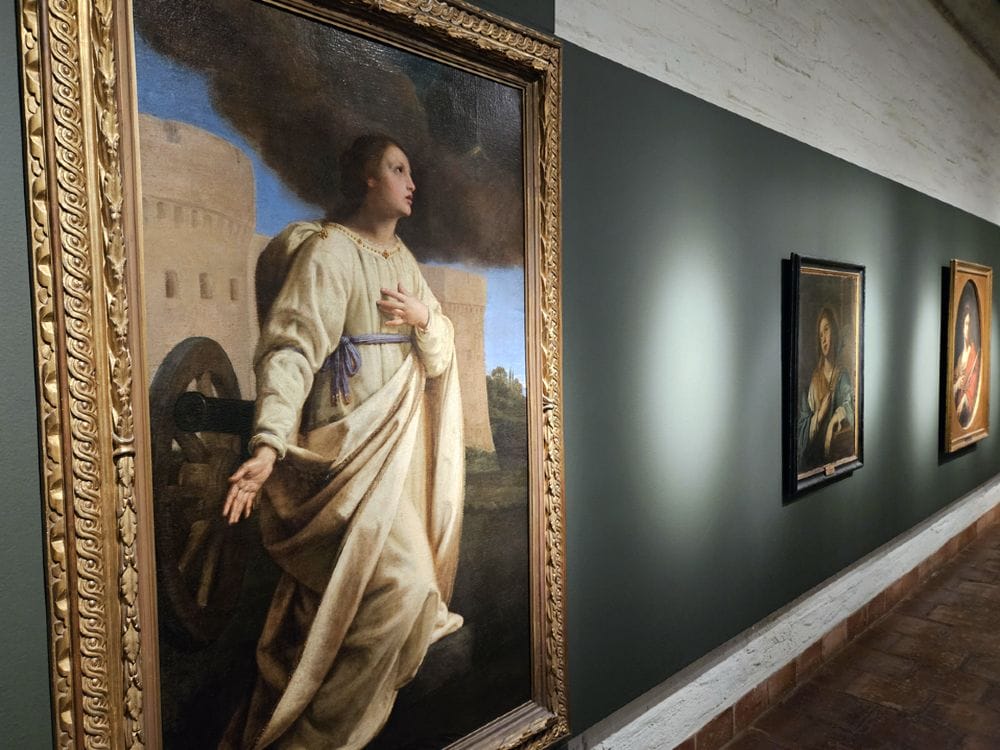
“Finding Saint Barbara” depicts the story of the city’s patron saint in both religious artworks from the Museum’s collections alongside those on loan from the Santa Barbara Mission Archive-Library and Santa Barbara Museum of Art, among others.
Artifacts depicting the saint include several postcards sent to the museum by local history enthusiasts during their travels, a fruit crate label from a local grower, a historic souvenir plate featuring Saint Barbara among city landmarks, and more.
Historical photographs reveal that Saint Barbara was portrayed in community celebrations as early as 1890, even before the first Fiesta was held in 1926.
The exhibit also marks the 100th year that a member of the Native Daughters of the Golden West, Reina del Mar Parlor, has portrayed Saint Barbara during the Historical Parade. On view are photos of past parades, the robe worn in the parade for over 60 years, newspaper clippings from the archives of the Santa Barbara News-Press, and a collection of memorabilia and statues of the patron saint.
An interactive call to action encourages locals and visitors to spot the city’s patron saint in public art and nearby landmarks.
“Arte de los Mantónes” (“Art of the Shawls”) displays a selection from the museum’s collection of more than 100 shawls spanning from the early 1800s to the early 1900s. The vibrant textiles feature intricate embroidery of flowers, birds, plants, and animals, and were used in traditional Spanish dances and worn during celebrations.
Leave a Response