August 12, 2026
Heal the Ocean Study Reveals New Clues to Summerland’s Legacy Oil Pollution
Preliminary findings could help prioritize well abandonment and establish a model for identifying problematic coastal oil infrastructure worldwide.
Santa Barbara, CA – Heal the Ocean (HTO) is currently conducting the Summerland Oil Mitigation Study (SOMS) to map the geology and infrastructure of the Summerland seafloor and surrounding area as well as develop a detailed understanding of hydrocarbon emissions from the region’s legacy oil wells. The study is providing critical information to help the California State Lands Commission (SLC) determine which wells should be prioritized for full abandonment. SLC has already abandoned eight legacy oil and gas wells in Santa Barbara County. However, there are several hundred high-priority legacy wells in the Summerland area alone that could leak oil into the marine environment.
SOMS is intended to help address that much larger challenge by identifying which wells are generating the greatest emissions and understanding how the wells and underlying geology are connected. Preliminary findings are revealing previously unknown connectivity between wells, as well as methane plumes and additional seafloor faults and fractures that may provide pathways for hydrocarbons to reach the marine environment.
“What we are learning in Summerland has significance far beyond this one oil field,” said Karina Johnston, Executive Director of Heal the Ocean. “SOMS is giving us the ability to connect emissions, geology, and infrastructure so we can identify which legacy wells are actually driving pollution and target abandonment where it can have the greatest benefit. Just as importantly, the team is developing a science-based approach that could be applied to aging oil infrastructure anywhere in the world, whether it is on land or underwater.”
Preliminary Findings
SOMS researchers have been collecting time-series data from two Meteorological Air Quality Trailers to track emissions from the Summerland nearshore oil field. Analysis of the data has revealed previously unknown connectivity between wells, information that could help determine which wells should be targeted during different phases of abandonment.
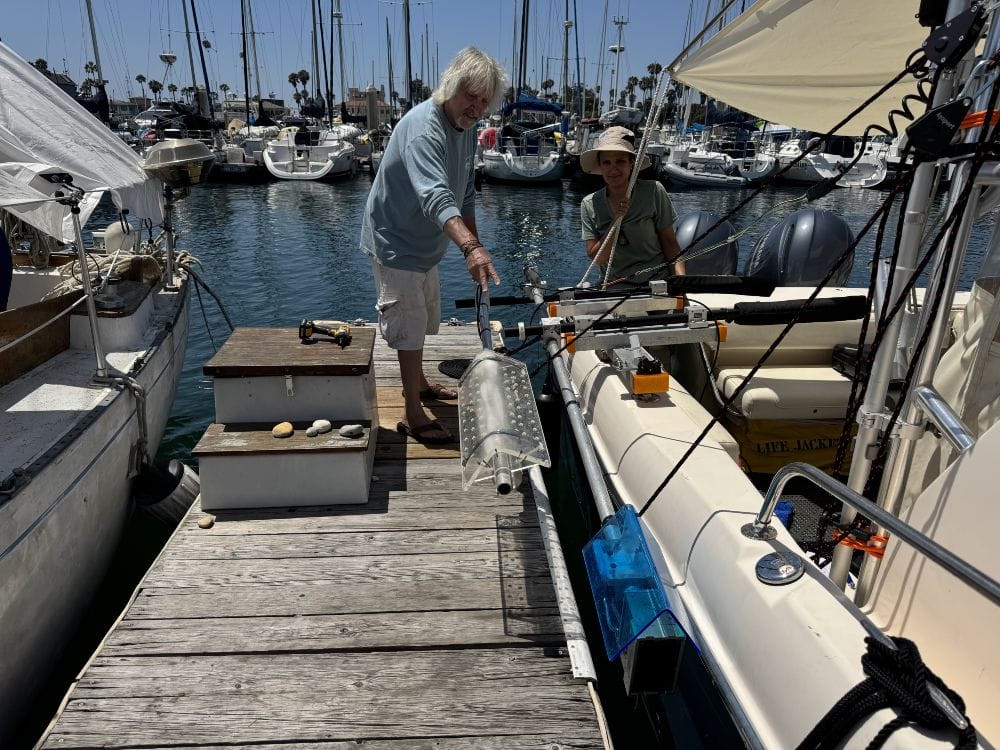
This week, during marine surveys conducted on a research vessel, HTO and its scientific partners at Bubbleology Research International also pinpointed several methane (CH₄) plumes using multiple technologies, including methane detection systems, live-stream multi-beam sonar, water quality sensors, and a crude-oil sensor capable of detecting concentrations down to approximately 1 part per billion (ppb).
Researchers have also identified more faults and fractures on the seafloor than had previously been mapped. These geological features may represent additional pathways for hydrocarbons to migrate toward the seafloor and surrounding waters.
Building a Broader Tool for Legacy Oil Infrastructure
SOMS combines air-emissions monitoring with seafloor mapping, water chemistry analyses, meteorological data, aerial observations, and other measurements to create a more complete picture of legacy oil fields. The goal is to develop a repeatable technique for identifying problematic wells and aging oil infrastructure based on their emissions and geological characteristics. The resulting methodology could potentially be used in other coastal oil fields around the world to help regulators and communities identify pollution sources.
For Summerland, the immediate objective is to provide the scientific information needed to help HTO and SLC determine which legacy wells should be abandoned next and how abandonment can be most effectively sequenced. The study, funded by the California Ocean Protection Council, Nora McNeely Hurley Foundation, and Mericos Foundation, will be completed in December 2026, and findings will be shared publicly.
To donate to Heal the Ocean, visit www.healtheocean.org.
About Heal the Ocean
Founded in 1998, Heal the Ocean is a Santa Barbara–based nonprofit organization focused on reducing ocean pollution and providing science-based solutions to improve the health of our ocean and resilience of our coasts to benefit people and wildlife. Tax ID: 77-0565183.
Leave a Response